


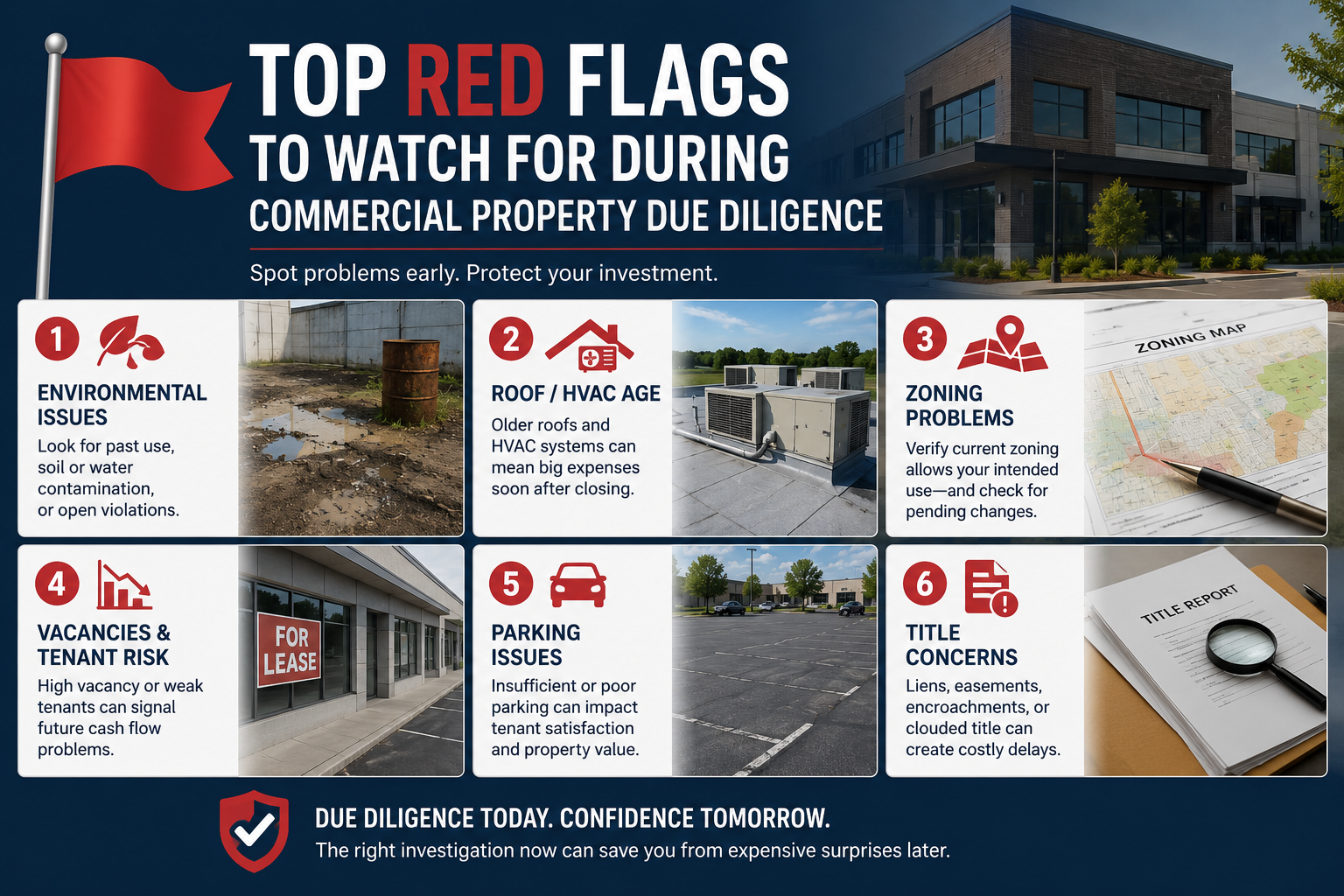
Top Red Flags to Watch for During Commercial Property Due Diligence
Acquiring a commercial property or apartment building is a high-stakes endeavor that requires meticulous scrutiny. A property that appears flawless on a marketing brochure can harbor structural, legal, or environmental liabilities that drastically erode your valuation and cash flow post-closing. Spotting problems early is the ultimate way to protect your investment capital.
True risk mitigation occurs during the commercial property due diligence phase. Conducting a thorough investigation now can save you from expensive surprises later. To safeguard your portfolio, ensure your acquisition team actively screens for these top six operational and legal red flags.
1. Environmental Issues & Contamination
Environmental liabilities are among the most punitive risks a commercial investor can face. Federal and state laws can hold property owners liable for cleanup costs, regardless of whether they caused the contamination. When reviewing a property’s history, always investigate:
- Past Land Use: Properties previously occupied by dry cleaners, gas stations, auto repair shops, or manufacturing facilities carry elevated risks of chemical or petroleum leaks.
- Soil and Water Contamination: Migrating pollutants from adjacent properties can contaminate your site’s soil or local groundwater.
- Open Environmental Violations: Unresolved regulatory enforcement actions or outstanding remediation requirements must be cleared before taking title.
Executing a Phase I Environmental Site Assessment (ESA) is non-negotiable to identify these invisible threats early.
2. Advanced Roof and HVAC Aging
Capital expenditures (CapEx) for building systems can instantly derail an investor’s underwriting projections if replacements are required immediately after closing. Older roofs and HVAC infrastructure represent massive looming expenses.
- Roofing Lifespans: Commercial flat roofs generally last 15 to 25 years. A roof nearing the end of its functional life requires budgeting hundreds of thousands of dollars for full replacement.
- HVAC Systems: Chillers, cooling towers, and package units are highly capital-intensive. Aging mechanical units run inefficiently, drive up utility costs, and cause immediate tenant dissatisfaction.
Always hire independent structural engineers to assess the exact remaining useful life of these core asset components.
3. Complex Zoning Problems
Never assume a property’s current operations or your future expansion plans are automatically permitted by local municipalities. Zoning restrictions can quietly render an investment unviable.
- Intended Use Alignment: Verify that your specific tenant mix or target operational use explicitly complies with current local zoning codes.
- Non-Conforming Uses: A building operating under a “grandfathered” non-conforming status may lose that designation if it undergoes a major renovation or stands vacant for a specific period.
- Pending Rezoning Changes: Investigate municipal planning records for upcoming neighborhood rezoning efforts or overlay districts that could limit your property’s long-term utility.
4. Elevated Vacancies & Severe Tenant Risk
The stability of a commercial asset’s cash flow relies entirely on the strength of its rent roll. Substandard tenant profiles or high structural vacancy indicate deep underlying operational friction.
- Weak Tenant Financials: Mom-and-pop tenants or companies with deteriorating corporate balance sheets increase your exposure to lease defaults and unexpected vacancies.
- Imminent Lease Expirations: A property with multiple key leases expiring within 12 to 24 months of purchase presents major cash flow volatility and lease-up risks.
- Market Vacancy Discrepancies: If the subject property suffers from higher vacancy rates than the surrounding submarket, it often signals poor property management, deferred maintenance, or undesirable floor layouts.
5. Inadequate Parking Infrastructure
Parking is a primary driver of commercial real estate value and tenant retention, yet it remains one of the most overlooked elements during due diligence. Insufficient or poorly designed parking directly limits asset utility.
- Municipal Code Compliance: Ensure the total stall count meets local zoning minimums for your specific asset type (e.g., medical offices require significantly higher parking ratios than standard retail or industrial warehouses).
- Tenant Satisfaction: Cramped parking spaces, poor physical layouts, or shared parking agreements can frustrate customers and employees, ultimately driving tenants to competing facilities.
- Deferred Lot Maintenance: Pavement spider-webbing, deep potholes, and failing drainage systems represent expensive immediate remediation costs.
6. Title Concerns & Legal Clouds
A clouded title can delay transactions for months, compromise your ability to secure institutional financing, or restrict your long-term exit strategy. Reviewing a preliminary title report is essential to expose hidden legal liabilities:
- Mechanics’ Liens and Tax Liens: Unpaid contractors or outstanding government tax obligations can attach directly to the commercial property.
- Restrictive Easements: Third-party access rights can severely limit your physical ability to expand the building footprint or modify the site layout.
- Encroachments: Neighboring structural elements, fences, or utility lines that cross your property boundaries create complex legal disputes that must be resolved prior to closing.
Due Diligence Today. Confidence Tomorrow.
The core objective of a disciplined due diligence process is clarity. By identifying these critical operational, structural, and legal red flags before removing contingencies, you protect your downside risk and position your commercial real estate portfolio for sustainable, predictable growth.
Frequently Asked Questions
What is the difference between a Phase I and Phase II Environmental Assessment?
A Phase I Environmental Site Assessment (ESA) involves a thorough review of historical records, historical aerial photographs, and a physical site walkthrough to identify potential environmental contamination. If a Phase I identifies a Recognized Environmental Condition (REC), a Phase II ESA is commissioned, which includes actual soil, groundwater, and vapor sampling to verify the presence of hazardous substances.
How can an investor protect against upcoming roof or HVAC replacement costs?
Investors can protect themselves by obtaining a comprehensive Property Condition Assessment (PCA) during the due diligence period. If building systems are found to be near the end of their useful life, the buyer can negotiate a credit from the seller (price reduction) or require the systems to be repaired or replaced prior to closing escrow.
Why is a title report so important in commercial real estate acquisitions?
A title report ensures that the seller has the legal right to transfer ownership and uncovers any hidden legal claims against the asset. It reveals encumbrances such as active tax liens, mortgages, restrictive covenants, easements, or encroachments that could disrupt your operations, limit future development, or hinder a smooth future sale.