

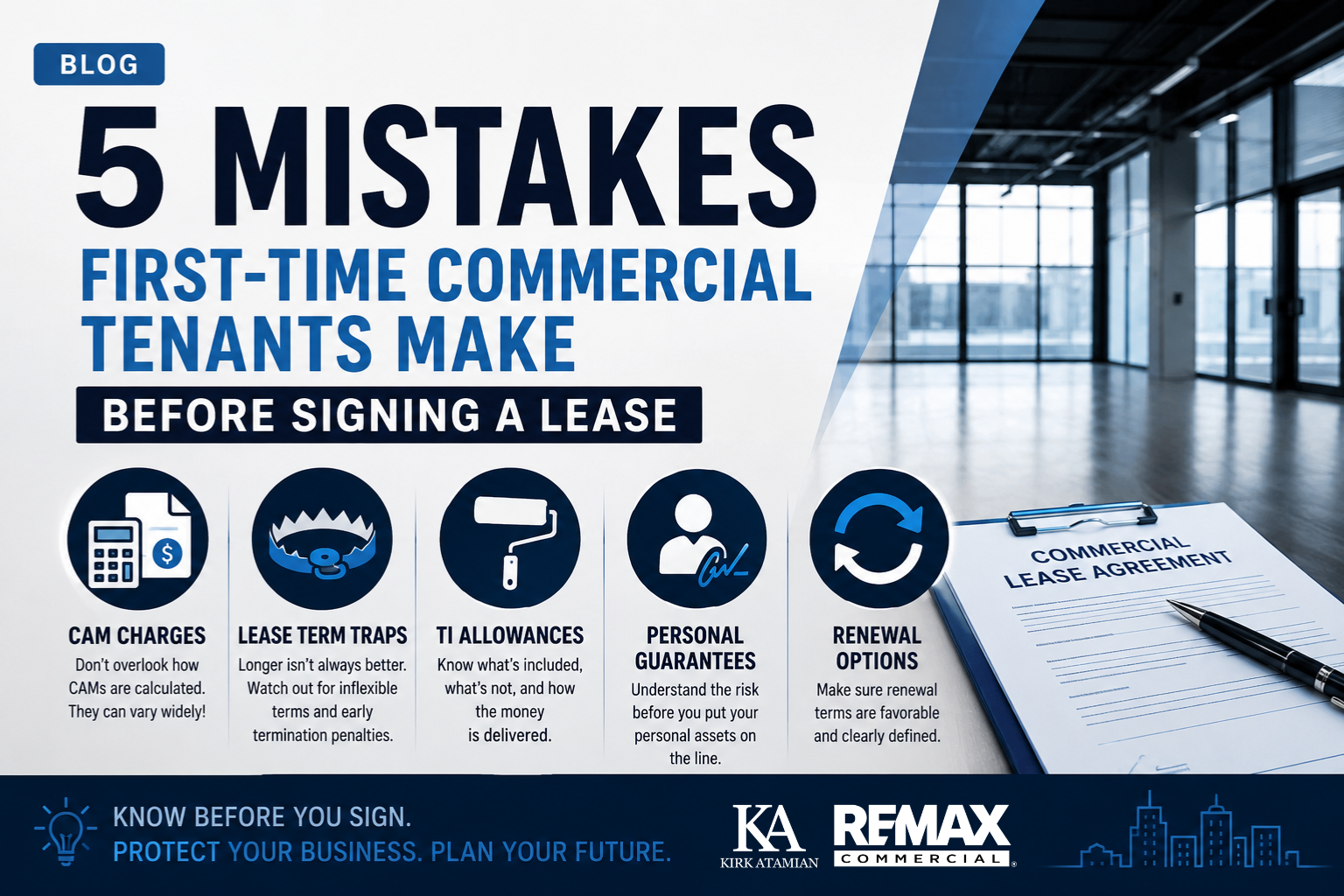
Stepping into your first commercial space is a major milestone that signals growth and ambition. However, the excitement of opening a new storefront or office often masks the legal and financial minefields hidden within a standard lease agreement.
Unlike residential leases, commercial contracts are largely unregulated, operating strictly on the principle of “buyer beware.” Many first-time tenants rush to sign, only to find themselves tethered to escalating costs and rigid terms that can threaten the very survival of their business.
To ensure your first location is a launchpad rather than a liability, you must look beyond the monthly rent and master the fine print. Review the breakdown below to see exactly what to watch out for before you sign.
1. Falling into the Uncapped CAM Charge Pitfall
Common Area Maintenance (CAM) charges are the “hidden rent” that can quietly dismantle your profitability if left unchecked. These fees cover the landlord’s operating expenses—everything from snow removal and landscaping to roof repairs and administrative salaries—and are passed through to the tenants.
- The Mistake: Accepting a lease without a CAM cap. Without a negotiated limit on how much these expenses can increase year-over-year, you are essentially handing the landlord a blank check.
- The Risk: An enticing base rent can quickly skyrocket if a landlord decides to overhaul the parking lot or if sky-high utility costs are passed down without restriction.
- The Fix: Always demand a “cumulative cap” to ensure your overhead remains predictable.
2. Getting Caught in Lease Term Traps
The duration of your lease is a double-edged sword: too short, and you risk losing a successful location; too long, and you’re trapped in a space that no longer fits your needs.
- The Mistake: Not aligning the lease length with your actual business plan. While a five- or ten-year lease might come with more initial perks, it is a massive financial commitment for a startup.
- The Risk: Failing to account for “holdover” clauses can be devastating. If your lease expires and you haven’t moved or renewed, many contracts allow the landlord to charge 150% to 200% of your previous rent.
- The Fix: Negotiate flexibility through “assignment” or “subletting” rights. This gives you a viable exit strategy if your business expands rapidly or needs to pivot.
3. Underestimating the Reality of TI Allowances
A Tenant Improvement (TI) allowance—the money a landlord provides to build out or renovate your space—often feels like “free money,” but it is frequently a calculated lure.
- The Mistake: Assuming the allowance will cover the total cost of construction. In today’s market, material and labor costs often far exceed the standard $20–$50 per square foot offered by landlords.
- The Risk: Tenants who don’t get detailed contractor bids before signing find themselves on the hook for massive out-of-pocket expenses just to get the doors open.
- The Fix: Get your bids early, and clarify if the allowance is a reimbursement or paid upfront. Waiting months for a reimbursement check while your capital is tied up in drywall and plumbing can create a lethal cash-flow gap.
4. Over-Leveraging with Personal Guarantees
Perhaps the most intimidating hurdle for a first-time tenant is the personal guarantee, which bypasses your corporate entity and puts your personal assets—your home, savings, and car—on the line if the business fails.
- The Mistake: Blindly signing a “full-term” guarantee out of pressure. Landlords almost always insist on this for new companies with limited credit history.
- The Risk: You remain personally liable for the financial weight of the lease, even if the business closes its doors.
- The Fix: Savvy tenants negotiate for a “Good Guy Guarantee,” which limits your personal liability only to the time you actually occupy the space. Alternatively, ask for a “burn-off” provision, where the guarantee expires after a few years of consistent, on-time payments.
5. Overlooking Vital Renewal Options
The final, and perhaps most common, mistake is treating the end of the lease as a problem for the future.
- The Mistake: Signing a lease without a clearly defined Option to Renew.
- The Risk: You have no legal right to stay once your initial term is up. Landlords can choose to lease the space to a competitor or hike the rent to “market rates” that they define unilaterally.
- The Fix: Your lease must include a pre-negotiated renewal formula—typically tied to the Consumer Price Index (CPI) or a fair-market-value arbitration process—and a specific window in which you must notify the landlord of your intent to stay. Securing your right to remain is the only way to ensure your long-term investment isn’t snatched away just as it begins to pay off.
💡 Know Before You Sign: The Takeaway
Whether you are opening a boutique in San Jose or looking for office space in Silicon Valley, the lease you sign today dictates your operational freedom for years to come.
In the high-stakes world of commercial real estate, “market rate” is only a starting point—everything is negotiable. By addressing these five critical areas before the ink dries, you transform a standard legal document into a strategic tool that protects your capital, limits your personal risk, and ensures your business has a stable foundation to grow on. Don’t just sign for a space; secure your future.